

What is The Plastic Detox on Netflix?
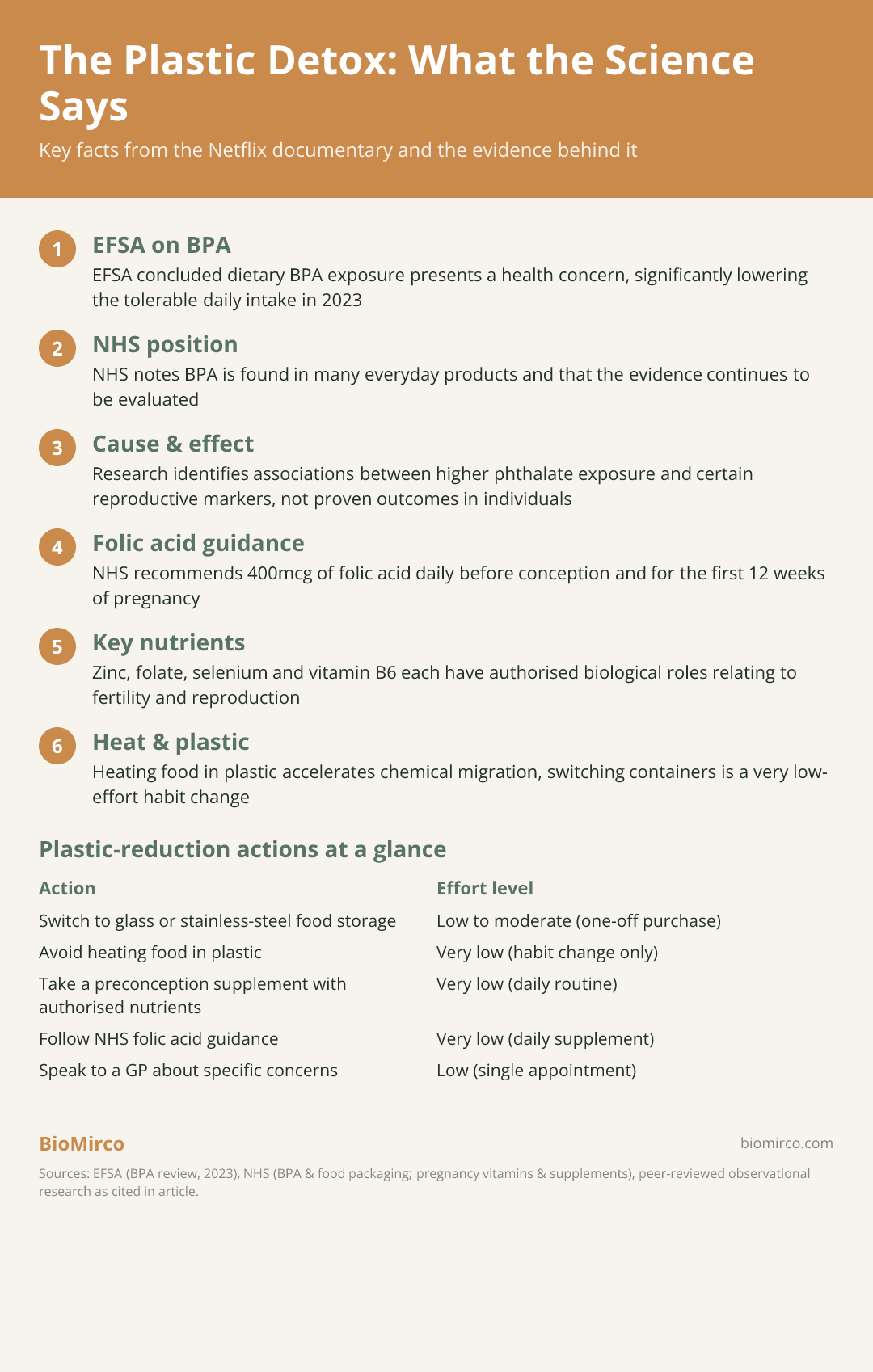
The Plastic Detox is a Netflix documentary that investigates how plastic chemicals enter the human body and what effect they may have on health. The show follows participants who attempt to reduce their everyday plastic exposure over a set period, with before and after testing used to track chemical markers in their blood and urine. It has prompted a lot of questions, particularly around fertility and reproductive health, and it is worth looking at what the science actually says alongside what the documentary presents.
What are microplastics and plasticisers, and why are people concerned?
Microplastics are tiny plastic particles, and plasticisers are chemical additives used to make plastics flexible. The two types most discussed in relation to health are phthalates and bisphenol A, often called BPA. Both are found widely in food packaging, drink bottles, cling film, plastic containers and many everyday household items. Regulatory and scientific bodies have examined whether these chemicals may interfere with the body's hormonal signalling. The European Food Safety Authority (EFSA) reviewed BPA specifically and concluded that dietary exposure presents a health concern, leading to a significant lowering of the tolerable daily intake in 2023. The NHS also notes that BPA is found in many everyday products and that the evidence is continuing to be evaluated.
Does the show accurately reflect the science?
The documentary presents real and peer reviewed concerns, but it is worth keeping a sense of proportion. The research into phthalates and BPA is ongoing and not fully settled. Associations have been observed in studies between higher exposure levels and certain health markers, but proving direct cause and effect in humans is complex. The NHS notes that while animal studies have raised questions, the evidence in humans is still being evaluated. The documentary is a useful starting point for awareness, but it is not a substitute for medical guidance.
Why are people specifically worried about plastics and fertility?
Endocrine disrupting chemicals are of particular interest to researchers studying reproductive health because hormonal signalling plays a central role in the menstrual cycle, ovulation and sperm production. Some observational studies have noted statistical associations between higher urinary phthalate concentrations and changes in certain reproductive markers. If you have specific concerns about fertility and environmental exposure, speaking to a GP or fertility specialist is always the right first step.
What practical steps can you take to reduce everyday plastic exposure?
Reducing plastic exposure does not require an extreme overhaul of daily life. The changes below are small, practical and easy to build into an existing routine.
- Store food in glass, ceramic or stainless steel containers where possible, particularly for hot or acidic foods.
- Avoid heating food in plastic containers, including those labelled microwave safe, as heat increases the likelihood of chemical migration.
- Choose loose or paper wrapped produce when you can, rather than produce wrapped tightly in cling film.
- Use a reusable stainless steel or glass water bottle instead of single use plastic bottles.
- Ventilate your home regularly, as household dust can carry plastic particles from furnishings and synthetic materials.
- Opt for fragrance free personal care products where possible, as some fragrances contain phthalates as fixatives.
None of these steps are about fear or perfection. They are practical habits that many health-aware households are already adopting.
How do plastics related steps compare with other everyday choices?
It can be hard to know where to prioritise your attention. The table below puts a few common actions in context.
| Action | Why it matters | Effort level |
|---|---|---|
| Switch to glass or stainless steel food storage | Reduces contact between food and plastic chemical migrants, especially with heat | Low to moderate (one off purchase) |
| Avoid heating food in plastic | Heat accelerates chemical migration from plastic into food | Very low (habit change only) |
| Take a preconception supplement with authorised nutrients | Helps fill common nutrient gaps during preconception | Very low (daily routine) |
| Follow NHS folic acid guidance | Folate contributes to maternal tissue growth during pregnancy; NHS recommends 400mcg daily before conception and for the first 12 weeks | Very low (daily supplement) |
| Speak to a GP about specific concerns | Personalised guidance cannot be replaced by general information | Low (single appointment) |
How does nutrition fit into this picture?
Good nutritional support is one part of a broader approach to looking after your health. Ensuring your body has the right nutritional foundations is something you can actively work on. Several nutrients have authorised roles recognised by regulatory bodies.
- Zinc contributes to normal fertility and reproduction.
- Folate contributes to normal blood formation and to maternal tissue growth during pregnancy.
- Selenium contributes to normal spermatogenesis.
- Vitamin B6 contributes to the regulation of hormonal activity.
These are the nutrients that BioMirco's fertility formulations are built around. Each one is selected for its authorised biological role and included as part of a straightforward, evidence informed approach to daily nutrition.
What about diet more broadly during preconception?
Diet quality matters beyond any single concern. The NHS recommends taking 400 micrograms of folic acid daily before pregnancy and during the first 12 weeks. A varied diet rich in whole foods, plenty of vegetables, good quality protein sources and healthy fats provides a strong nutritional foundation. It is also worth being mindful of UK guidance around certain foods during the preconception period. The NHS advises limiting oily fish to two portions per week due to mercury content, and avoiding raw or undercooked foods such as raw shellfish, undercooked meat and unpasteurised cheeses.
Should you be worried after watching The Plastic Detox?
The documentary raises genuinely important questions about modern chemical exposure and is worth watching with an open and critical mind. The most useful response is not anxiety but informed action: making practical changes to reduce unnecessary exposure, eating well, prioritising sleep and movement, and getting the right nutritional support in place. If you have specific health concerns, including those related to fertility, your GP is always the right first port of call.
This article is for general information and education only. It is not medical advice. Nutrient claims refer to authorised biological roles of nutrients, not to guaranteed outcomes. Always speak with your GP or a qualified healthcare professional about your individual needs.