

What is a fertility nutrition stack, and why does food matter alongside supplements?
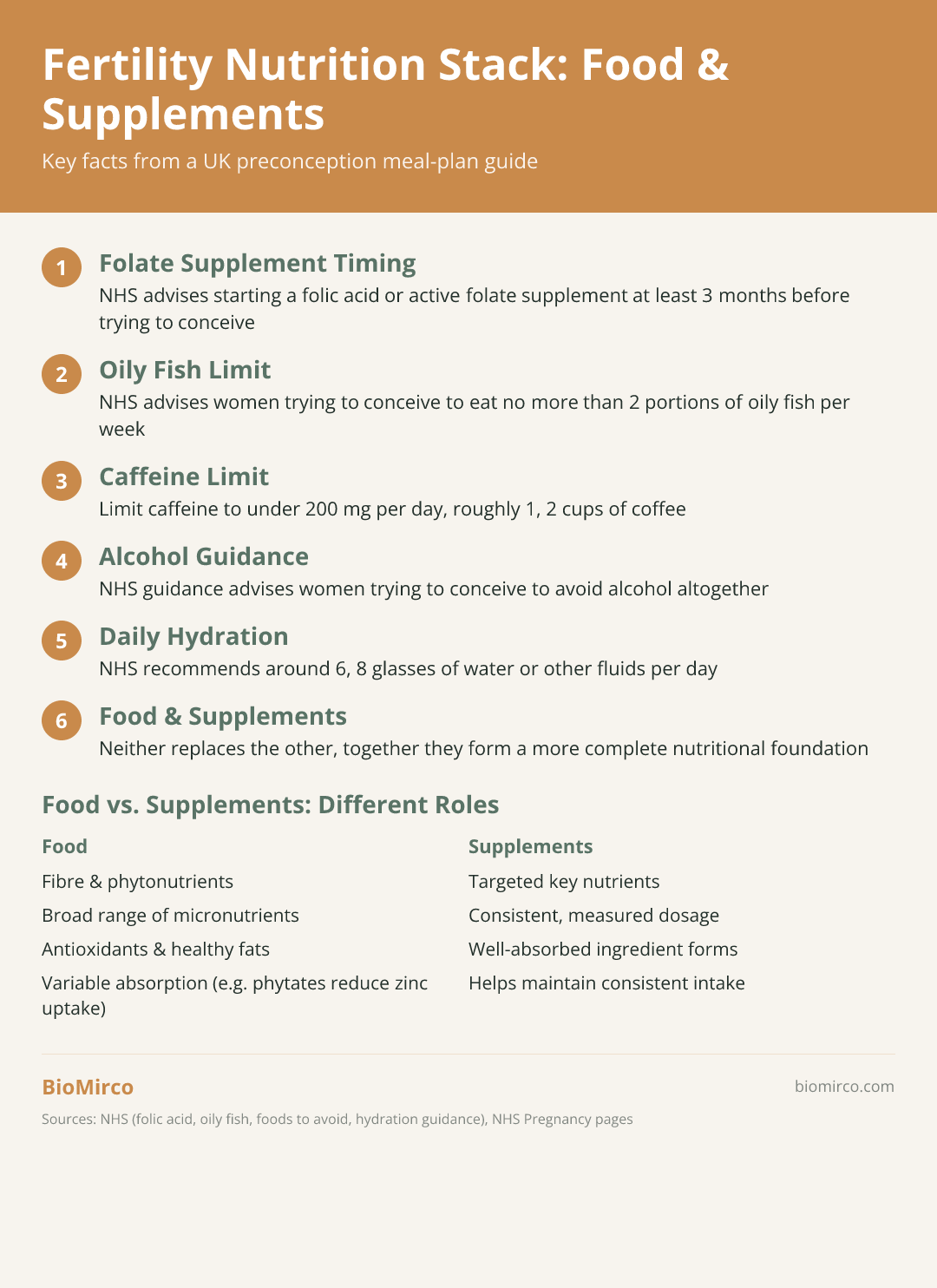
A fertility nutrition stack is the combination of nutrients, from both food and supplements, that you bring together as part of a preconception routine. Supplements can help fill nutritional gaps, but food provides fibre, antioxidants, healthy fats and a wide range of micronutrients that work alongside the nutrients in your supplement. Neither replaces the other. Together, they form a more complete foundation.
If you missed Part 1 of this series, we covered the key nutrients to look for in a preconception supplement and why ingredient form and dosage matter. This second part focuses on the food side, with a practical, realistic UK meal plan you can actually follow.
Which foods are worth prioritising in a preconception diet?
Certain foods are particularly rich in the nutrients that matter most during preconception preparation. The goal is not a restrictive diet. It is a consistent, varied pattern of eating that gives your body a broad range of useful nutrients to draw on.
- Dark leafy greens such as spinach, kale and watercress are among the best dietary sources of folate. The NHS advises that women take a folic acid or active folate supplement when trying to conceive, and eating folate-rich foods alongside this adds further nutritional support.
- Eggs are one of the few naturally good dietary sources of choline, a nutrient important during early pregnancy. They are also a source of iodine and protein.
- Oily fish such as salmon, sardines and mackerel provide omega-3 fatty acids and vitamin D. The NHS advises women who are pregnant or trying to conceive to eat no more than two portions of oily fish per week.
- Lentils and legumes provide plant-based protein, folate, iron and zinc.
- Nuts and seeds, particularly Brazil nuts, are a good dietary source of selenium. Zinc is found in pumpkin seeds and cashews.
- Dairy or fortified plant alternatives contribute iodine, calcium and, where fortified, vitamin D and B12.
- Wholegrains such as oats, brown rice and quinoa provide B vitamins, magnesium and sustained energy.
- Colourful vegetables and berries provide a range of antioxidant compounds and vitamin C, which contributes to the normal function of the immune system.
Are there foods to avoid when trying to conceive?
Yes, some foods carry specific guidance for women who are trying to conceive or may be in early pregnancy. The NHS provides clear advice on this, and it is worth being familiar with it before you start.
- Avoid liver and liver products such as pate. Liver is very high in vitamin A in the retinol form, which in large amounts can be harmful during early pregnancy.
- Avoid raw or undercooked meat, including deli meats and cured meats such as parma ham, salami and chorizo. These carry a risk of toxoplasmosis and listeria.
- Avoid raw shellfish and raw fish, including sushi made with raw fish.
- Limit caffeine to under 200mg per day. That is roughly one to two cups of coffee.
- Avoid alcohol. NHS guidance advises women trying to conceive to avoid alcohol altogether.
- Limit shark, swordfish and marlin due to high mercury levels.
If you are unsure about any specific food, the NHS foods to avoid in pregnancy page is a reliable, up-to-date resource.
What does a practical preconception meal plan look like for a UK week?
This seven-day meal plan is designed to be realistic for a busy week in the UK. It prioritises nutrient density without being complicated or expensive. All foods are appropriate for women who are trying to conceive, in line with current NHS guidance.
| Day | Breakfast | Lunch | Dinner | Snack |
|---|---|---|---|---|
| Monday | Porridge with berries and a sprinkle of ground flaxseed | Lentil and spinach soup with wholegrain bread | Baked salmon with roasted sweet potato and tenderstem broccoli | A small handful of Brazil nuts and walnuts |
| Tuesday | Scrambled eggs on wholegrain toast with a side of sliced avocado | Chickpea and roasted pepper salad with olive oil dressing | Chicken and vegetable stir-fry with brown rice | Full-fat Greek yoghurt with a drizzle of honey |
| Wednesday | Fortified oat milk with muesli and sliced banana | Sardines on wholegrain toast with sliced cucumber and tomato | Lentil dahl with wilted spinach and wholegrain flatbread | Sliced apple with almond butter |
| Thursday | Boiled eggs with wholegrain soldiers and a glass of orange juice | Roasted vegetable and quinoa bowl with a tahini dressing | Grilled mackerel with new potatoes and steamed green beans | A small handful of pumpkin seeds and dried apricots |
| Friday | Wholegrain toast with nut butter and sliced strawberries | Spinach, edamame and brown rice salad with a miso dressing | Turkey meatballs in a tomato and lentil sauce with wholegrain pasta | Full-fat yoghurt with blueberries and a sprinkle of chia seeds |
| Saturday | Vegetable frittata made with eggs, courgette, peppers and feta | Homemade vegetable and bean soup with a wholegrain roll | Baked cod with sweet potato mash and steamed kale | Oat cakes with hummus and sliced carrot and cucumber |
| Sunday | Overnight oats with fortified plant milk, mixed seeds and raspberries | Grilled chicken with a large mixed salad including watercress, avocado and pumpkin seeds | Slow-cooked vegetable and chickpea stew with brown rice | A small portion of mixed nuts and a piece of dark chocolate |
Download our simple 7-day meal plan to make nourishing, fertility-friendly eating easier throughout the week.
How does food work alongside a preconception supplement?
Food and supplements serve different roles. A well-formulated preconception supplement provides targeted nutrients, such as active folate, zinc and iodine, in forms your body can absorb readily. Food provides the broader nutritional context around them, including fibre, phytonutrients and a variety of minerals that no single supplement can replicate.
Zinc contributes to normal fertility and reproduction. You can find zinc in pumpkin seeds, cashews and legumes, but dietary zinc levels vary and absorption depends on other factors in the diet, including the presence of compounds such as phytates found in wholegrains and legumes, which can reduce how much zinc is absorbed. A supplement that includes zinc in a well-absorbed form helps maintain consistent intake, while your diet adds further variety. BioMirco High Strength Zinc and Copper is one option worth considering here, providing zinc alongside copper, which helps to maintain the right balance between the two minerals.
Folate is another good example. Folate contributes to normal blood formation and to maternal tissue growth during pregnancy. Dark leafy greens provide dietary folate, but NHS guidance on folic acid advises women trying to conceive to take a supplement containing folic acid or active folate as well, since dietary sources alone are not considered sufficient for this specific purpose. The NHS recommends starting this at least three months before trying to conceive.
BioMirco fertility supplements are designed to complement a considered preconception diet, not replace it.
What about hydration and lifestyle habits?
Nutrition is one part of a wider preconception picture. Hydration, sleep and movement are all relevant alongside the food and supplement side of things.
- Aim for around six to eight glasses of water or other fluids per day, as recommended by the NHS.
- Regular, moderate movement supports general wellbeing and is broadly recommended as part of a healthy lifestyle during preconception preparation.
- Consistent, restorative sleep is worth prioritising as part of an overall approach to looking after yourself.
- Finding ways to look after your mental and emotional wellbeing is a reasonable part of any preconception routine. Your GP can offer guidance if you are looking for support in this area.
Do you need to eat perfectly to benefit from a preconception supplement routine?
No. Perfection is not the goal, and it is not realistic. The aim is a consistent, varied diet that covers as many nutritional bases as possible, supported by a supplement that fills the gaps. Some weeks will be better than others, and that is fine.
What matters more than any single meal is the overall pattern over time. A supplement routine is most useful when it is consistent too. Taking a quality preconception supplement daily, as part of a wider nutritional approach, helps maintain consistent intake of key nutrients during preconception preparation.
If you have specific dietary concerns, underlying health conditions, or have been trying to conceive for some time, speaking with your GP or a registered dietitian is always a sensible step. Supplements support wellbeing and fill nutritional gaps. They are not a substitute for medical advice or medical care.
This article is for general information and education only. It is not medical advice. Nutrient claims refer to authorised biological roles of nutrients, not to guaranteed outcomes. Always speak with your GP or a qualified healthcare professional about your individual needs.