

What is a fertility stack?
A fertility stack is a practical approach to combining food and supplements so that your body gets the nutritional support it needs during preconception. Rather than taking one supplement in isolation, the idea is to think about what you eat alongside what you take, so that your overall nutrient intake feels considered and consistent.
This is not a medical protocol. It is a way of being more intentional about your daily nutrition when you are preparing for pregnancy or have been trying to conceive for a while.
Why does preconception nutrition matter?
The months before conception are nutritionally significant. Your body is laying the groundwork for early pregnancy, and certain nutrients play specific, well-documented roles during this stage.
The NHS recommends that women trying to conceive take a folic acid supplement and maintain a balanced diet. But nutrition for preconception goes beyond one supplement. A range of nutrients, each with their own functions, are worth understanding before you start stacking anything.

Which nutrients are most relevant to preconception support?
Several nutrients have authorised health claims that are particularly relevant to preconception and early pregnancy planning.
- Folate (or folic acid): Folate contributes to normal blood formation and to maternal tissue growth during pregnancy. The NHS advises 400 micrograms of folic acid daily from before conception until 12 weeks of pregnancy. Active folate (methylfolate) is a form some women prefer, particularly those with variations in the MTHFR gene.
- Zinc: Zinc contributes to normal fertility and reproduction, as well as to normal DNA synthesis and cell division. Food sources include pumpkin seeds, lentils, chickpeas, beef and eggs.
- Vitamin D: Vitamin D contributes to normal immune system function and is recommended as a daily supplement for most adults in the UK throughout autumn and winter by the NHS. Many people in the UK are low in vitamin D, particularly in the colder months.
- Vitamin B6: Vitamin B6 contributes to the regulation of hormonal activity. It is found in foods such as salmon, chicken, bananas, potatoes and sunflower seeds.
- Selenium: Selenium contributes to normal spermatogenesis, making it particularly relevant in male preconception nutrition. It is found in Brazil nuts (even one or two a day can make a meaningful contribution), fish and eggs.
- Choline: Choline is an important nutrient in pregnancy planning, supporting normal cell division and nervous system development. It is found in eggs, liver, fish and soya. Many standard multivitamins do not include it, so it is worth checking your supplement label.
- Iodine: Iodine is needed for normal thyroid function. The NHS notes that women who are pregnant or trying for a baby should ensure adequate iodine intake. Dairy, fish and eggs are the main dietary sources in the UK.
How should you build a food-first fertility stack?
Food should always be the foundation. Supplements are there to fill the gaps, not to replace a varied diet.
A practical starting point is to look at your regular meals and identify where the key preconception nutrients are already present, and where the gaps might be.
What does a food-first fertility plate look like?
A well-rounded plate for preconception nutrition is built around whole foods that deliver a range of the nutrients listed above.
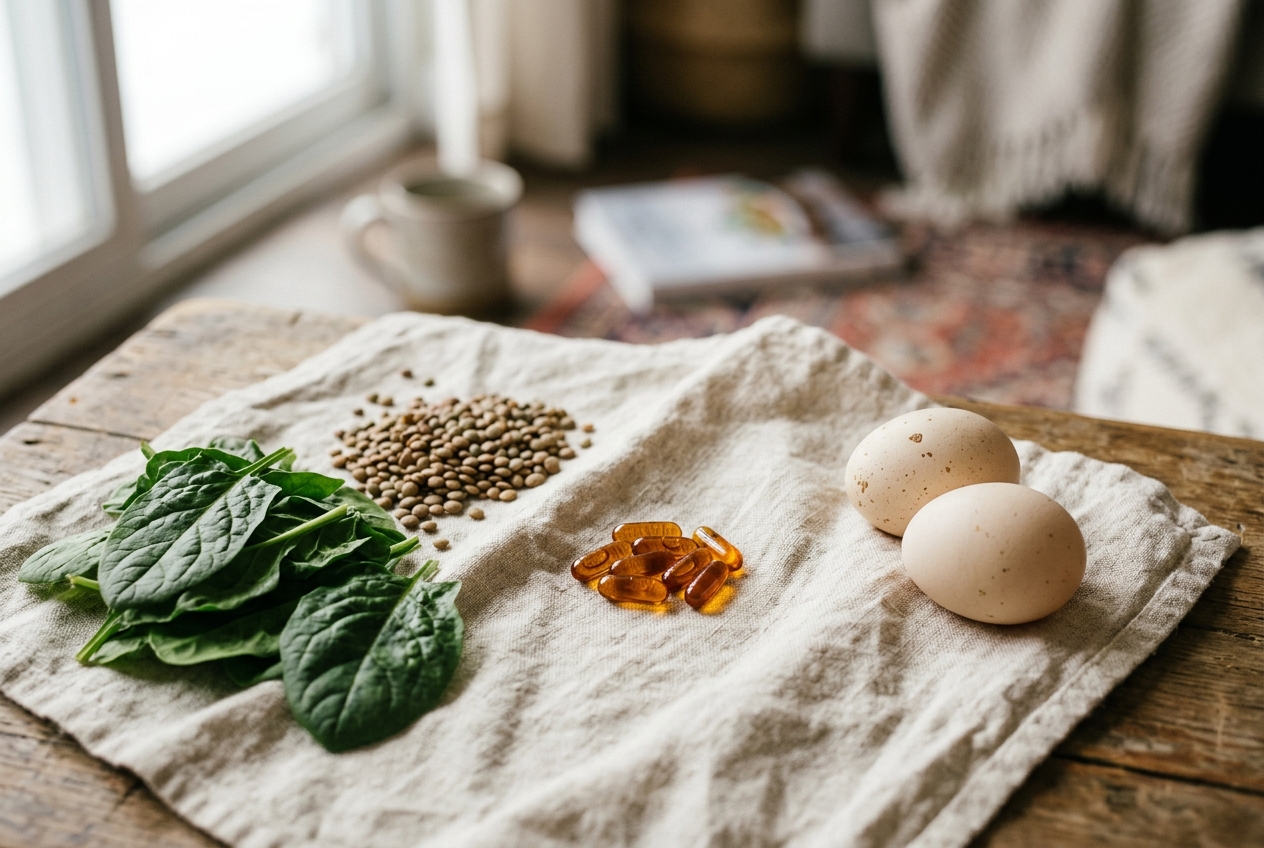
- Plenty of leafy greens such as spinach, kale and broccoli for folate, iron and fibre.
- Eggs, which are one of the most nutrient-dense preconception foods, providing choline, protein, selenium and vitamin D.
- Oily fish such as salmon or mackerel two to three times per week for omega-3 fatty acids, iodine, selenium and vitamin D. Choose options lower in mercury, as the NHS advises limiting high-mercury fish such as shark, swordfish and marlin when trying to conceive.
- Legumes such as lentils, chickpeas and black beans for plant-based zinc, folate and iron.
- A small handful of Brazil nuts for selenium.
- Whole grains such as oats, brown rice and quinoa for B vitamins, zinc and sustained energy.
- Full-fat dairy or fortified dairy alternatives for iodine and calcium.
Avoid foods that carry food safety risks during preconception and early pregnancy. The NHS advises avoiding raw or undercooked meat, unpasteurised dairy, raw shellfish, and deli meats such as pate and cured meats unless they are cooked through.
Where do supplements fit into the stack?
Even with a varied diet, it can be difficult to consistently hit the recommended levels of every relevant nutrient through food alone. That is where a carefully formulated supplement comes in.
A good preconception supplement is not just a standard multivitamin with a fertility label on it. Look for one that includes active or bioavailable forms of nutrients, such as methylfolate rather than basic folic acid, and that includes choline and iodine, which are often missing from standard formulas.
BioMirco Fertility is designed around exactly this kind of thinking: a more considered formulation with carefully selected nutrients, including active folate, choline, zinc and iodine, developed with specialist input and a real understanding of what preconception nutritional support should look like.

Does the timing of supplements matter?
Taking your supplement at a consistent time each day is more important than the specific time. Many people find it easiest to take their preconception supplement with breakfast. Some nutrients, including fat-soluble vitamins such as vitamin D, are better absorbed when taken with a meal that contains some fat.
If you are taking an iron-containing supplement or eating iron-rich foods, pairing them with a source of vitamin C can support normal iron absorption. A glass of orange juice or a handful of berries alongside your supplement works well for this.
What about supplements for male preconception health?
Preconception nutrition is relevant for both partners. Selenium contributes to normal spermatogenesis. Zinc contributes to normal fertility and reproduction. Both nutrients have authorised health claims relevant to male reproductive health, and both can be supported through food and a well-formulated supplement.
A Brazil nut or two a day, eggs, pumpkin seeds, and a zinc-containing supplement are simple additions to a male preconception routine.
How does a practical fertility stack come together?
Here is a simple summary of how a food and supplement fertility stack might look day to day.
| Nutrient | Food sources | Supplement consideration |
|---|---|---|
| Folate | Spinach, broccoli, lentils, asparagus | Look for methylfolate (active form) in your supplement |
| Zinc | Pumpkin seeds, chickpeas, eggs, beef | Included in most preconception formulas |
| Vitamin D | Oily fish, eggs, fortified dairy | Supplement recommended by the NHS, especially autumn and winter |
| Vitamin B6 | Salmon, chicken, bananas, potatoes | Often included in comprehensive preconception formulas |
| Selenium | Brazil nuts, fish, eggs | Check your supplement includes it, especially for male preconception |
| Choline | Eggs, fish, soya | Often missing from standard multivitamins; check the label |
| Iodine | Dairy, fish, eggs | Commonly missing from basic supplements; worth checking |
Is a fertility stack the same as a medical treatment?
No. A fertility stack is a nutritional approach, not a medical intervention. It does not diagnose, treat or prevent any condition. If you have been trying to conceive for 12 months or more (or 6 months if you are over 35), speaking with your GP is an important step. Good nutrition is a supportive foundation, but it works alongside medical care, not instead of it.
The nutrients discussed in this article all have authorised health claims, which means there is a recognised basis for including them in a well-rounded preconception routine. What they cannot do is guarantee any outcome. What they can do is help ensure your body has a solid nutritional foundation as you prepare.