

Is male fertility talked about enough?
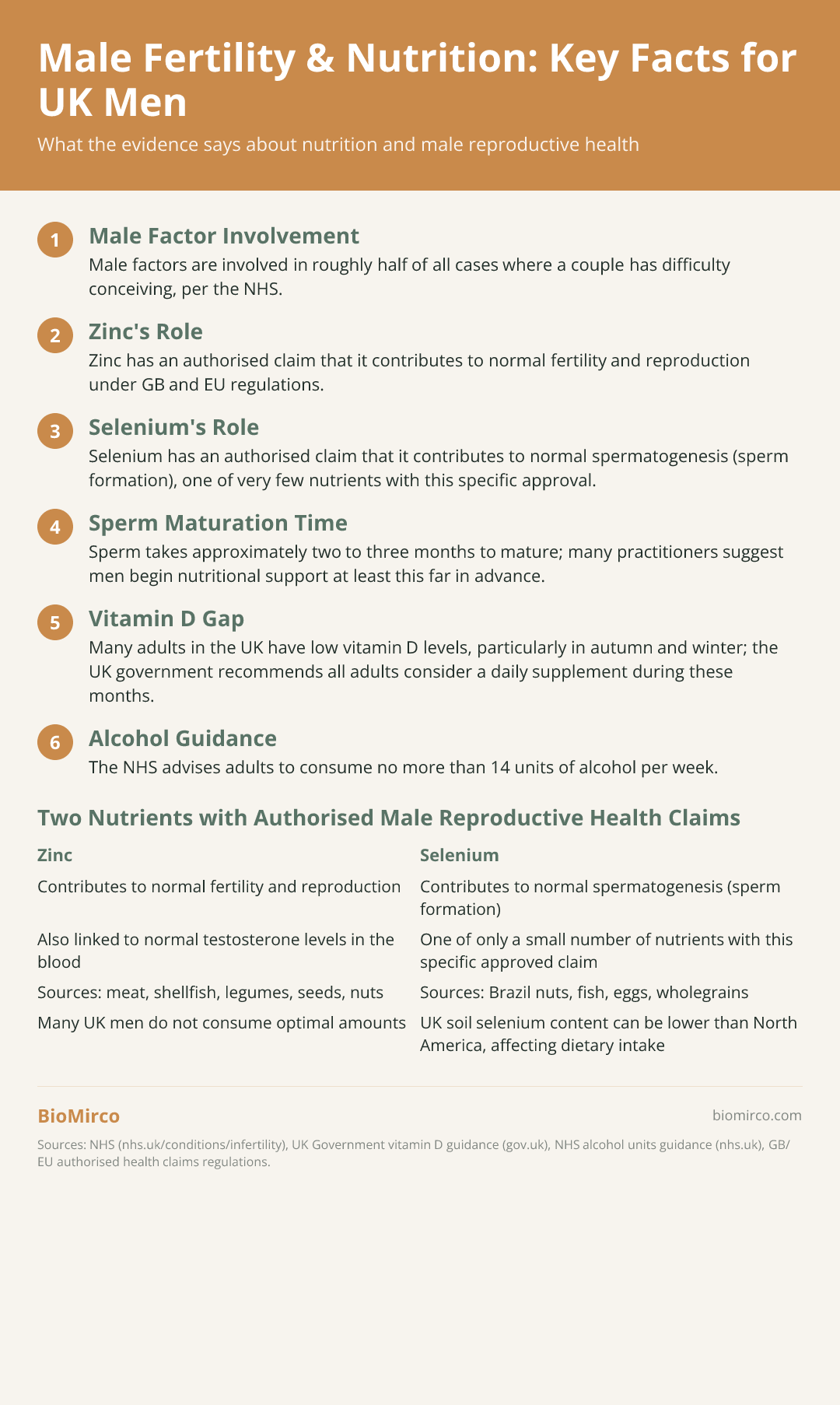
It is not talked about nearly as much as it should be. When couples face difficulty conceiving, the conversation often centres on women. But male factors are involved in roughly half of all cases where a couple has difficulty conceiving, according to the NHS infertility causes page. That means male reproductive health deserves just as much care, attention and practical support.
This article looks at what we know about male fertility and nutrition, which nutrients have authorised health claims relevant to male reproductive function, and what else may be worth knowing if you are a man supporting your own health at this stage.
What actually affects male fertility?
Male fertility is influenced by a combination of factors, some medical and some lifestyle related. The most common medical causes include problems with sperm production, sperm movement and structural issues, all of which a GP or urologist can investigate.
Lifestyle factors that research has linked to male reproductive health include:
- Smoking
- Excessive alcohol consumption
- Being significantly overweight or underweight
- Exposure to heat in the groin area over long periods
- High levels of ongoing stress
- Nutritional gaps in the diet
The NHS recommends that men who are trying to conceive with their partner speak to a GP, especially if the couple has been trying for a year or more without success. You can read more on the NHS infertility page.

Which nutrients have authorised claims relating to male reproductive health?
Two nutrients stand out because they carry authorised health claims specifically relevant to male reproductive function under GB and EU regulations.
| Nutrient | Authorised health claim | Common dietary sources |
|---|---|---|
| Zinc | Contributes to normal fertility and reproduction | Meat, shellfish, legumes, seeds, nuts |
| Selenium | Contributes to normal spermatogenesis (sperm formation) | Brazil nuts, fish, eggs, wholegrains |
These are not the only nutrients that matter for overall male health, but they are the ones where regulators have approved specific statements about fertility and reproduction. Any supplement brand making these statements does so on a firm, evidence reviewed basis, not guesswork.
Does zinc really matter for male reproductive health?
Yes, zinc is one of the most studied nutrients in relation to male reproductive function. It is involved in DNA synthesis, cell division and the maintenance of normal testosterone levels in the blood, all of which have authorised claims under UK supplement regulations.
Many men in the UK do not consume optimal amounts of zinc. Foods rich in zinc include:
- Oysters and shellfish
- Lean red meat and poultry
- Pumpkin seeds and hemp seeds
- Lentils and chickpeas
- Dairy products
If your diet is low in these foods, a well formulated supplement containing zinc in a bioavailable form may be worth considering as part of a broader approach to your health.

What is spermatogenesis and why does selenium matter?
Spermatogenesis is the process by which the body produces sperm. Selenium contributes to normal spermatogenesis. This is one of only a small number of nutrients with a specifically approved claim in this area, which is why it appears in more carefully formulated male supplement products.
Brazil nuts are one of the richest natural sources of selenium, with just one or two nuts providing a significant amount of your daily needs. That said, selenium intake from food varies considerably depending on the selenium content of the soil where food was grown, which can be lower in parts of Europe and the UK compared to North America.
Are there other nutrients worth knowing about?
Several other nutrients are commonly included in male wellness formulations and have broader authorised health claims relevant to general health, even if they do not carry specific male fertility claims.
- Vitamin D contributes to normal immune system function and normal muscle function. Many adults in the UK have low vitamin D levels, particularly in autumn and winter. The UK government recommends that all adults consider a daily vitamin D supplement during these months.
- Vitamin B6 contributes to the regulation of hormonal activity and normal psychological function.
- Folate (vitamin B9) contributes to normal blood formation and normal cell division. While folate is most associated with preconception support for women, cell division is relevant to sperm production as well. Some people are less efficient at converting standard folic acid into the active form the body uses. If that applies to you, a supplement containing active 5-MTHF (methylfolate) may be worth considering.
- Vitamin C contributes to the protection of cells from oxidative stress.
- CoQ10 (coenzyme Q10) is a naturally occurring compound found in cells throughout the body and present in foods such as oily fish, meat and wholegrains. It has no authorised health claim under UK supplement regulations, so no specific function statement can be made on a label. Research interest in CoQ10 and male reproductive health is ongoing, and it is commonly included in male wellness formulations. The ubiquinol form is often considered more readily absorbed than standard ubiquinone.
What about lifestyle changes alongside supplementation?
Supplements work best as part of a broader approach. Nutrition alone is rarely the whole picture. Men who are actively looking after their reproductive health may find it helpful to also focus on:
- Maintaining a healthy body weight
- Reducing alcohol intake, the NHS advises no more than 14 units per week for adults
- Stopping smoking
- Staying physically active without excessive heat exposure, for example avoiding very hot baths or saunas regularly
- Getting adequate sleep
- Managing ongoing stress where possible
None of these changes replace medical advice. If you or your partner have concerns about conception, speaking with your GP is always the right first step.

Should both partners take a supplement when trying to conceive?
Many fertility specialists and health organisations encourage both partners to think about their nutritional status during preconception. While the focus has historically been on women, there is growing recognition that male nutrition matters too.
A well formulated male supplement should contain nutrients with clear, authorised health claims, be made to a high standard, and be transparent about its ingredients and their forms. Cheaper, generic products may use lower quality ingredient forms or insufficient amounts to be meaningful.
At BioMirco, formulation decisions are built around careful ingredient selection and the science behind each nutrient included. Our range is designed to offer both partners clear, considered nutritional support during this stage of life, formulated around nutrients with authorised health claims.
How long should a man take a fertility supplement?
Sperm takes approximately two to three months to mature, which is why many practitioners suggest that men begin supporting their nutritional health at least two to three months before actively trying to conceive. Consistency over that period is more meaningful than a short term approach.
This does not mean supplements alone will determine outcomes. It simply means that, if nutritional support is going to be part of your plan, giving it enough time to be relevant makes practical sense.
What should men look for in a male fertility supplement?
Not all supplement formulations are equal. When choosing a supplement, it is worth looking for:
- Zinc in a bioavailable form, included at a meaningful level
- Selenium included at a meaningful level
- Active folate (5-MTHF) rather than standard folic acid, particularly for those who may have difficulty converting folic acid efficiently
- Transparency about all ingredients and their amounts
- Manufactured in the UK to GMP (Good Manufacturing Practice) standards
- Third-party testing where available
- Clear, compliant labelling that does not make exaggerated or unsupported claims
If a product makes bold promises about outcomes, that is a signal to look more carefully. Reputable supplement brands communicate clearly within the boundaries of what the science and regulations support.
This article is for general information and education only. It is not medical advice. Nutrient claims refer to authorised biological roles of nutrients, not to guaranteed outcomes. Always speak with your GP or a qualified healthcare professional about your individual needs.