

What is PCOS and why does it matter for women thinking about pregnancy?
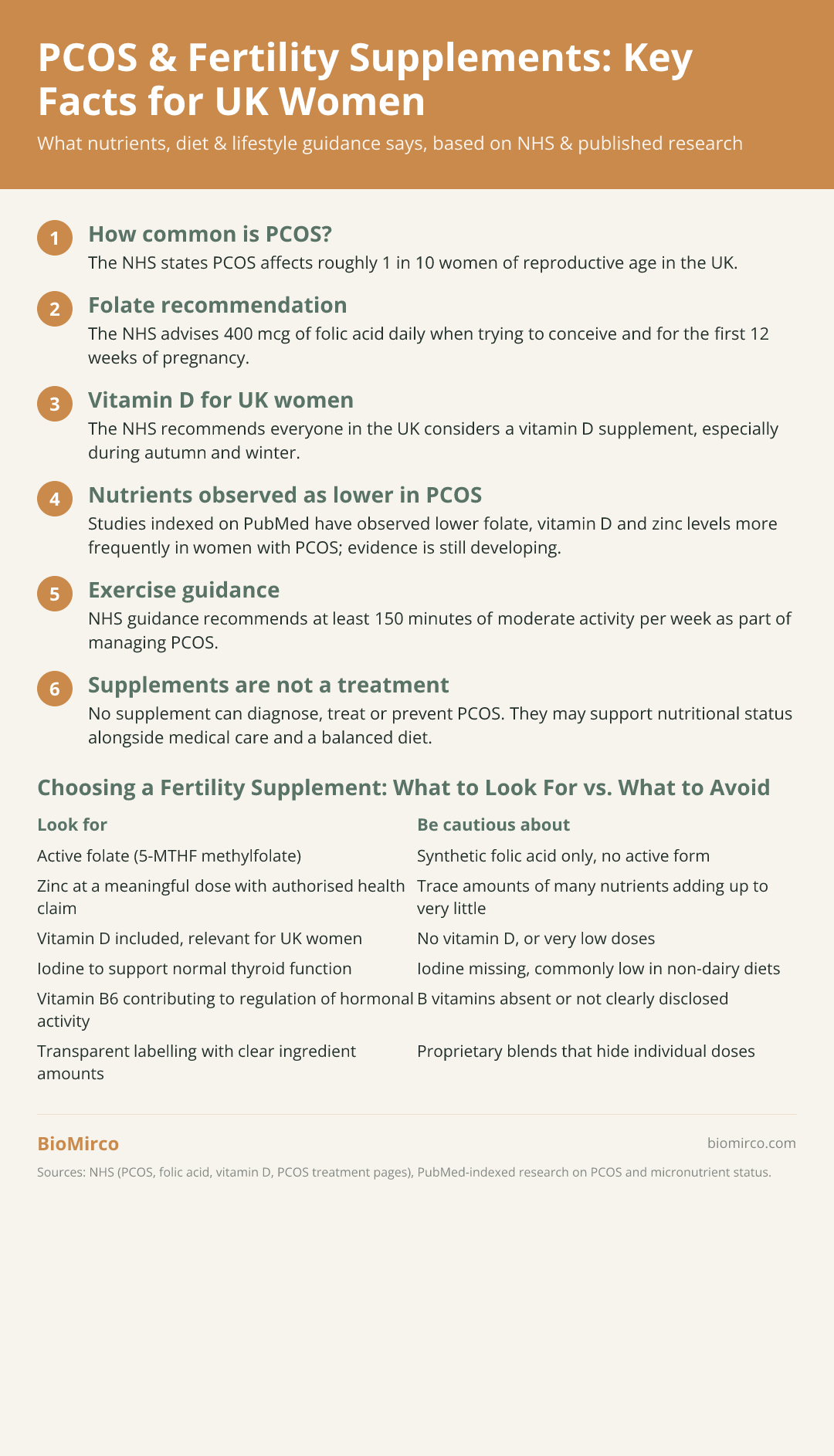
Polycystic ovary syndrome (PCOS) is one of the most common hormonal conditions affecting women of reproductive age in the UK. According to the NHS, it affects roughly 1 in 10 women. It is characterised by irregular periods, higher levels of androgens (male hormones), and small follicles on the ovaries that can be seen on an ultrasound scan.
For women who are planning a pregnancy or trying to conceive, a PCOS diagnosis can feel overwhelming. Many women with PCOS do go on to have healthy pregnancies, often with the right medical support and lifestyle adjustments alongside. This article is not medical advice. If you have been diagnosed with PCOS, your GP or a specialist should be your first port of call. This article explains some of the nutritional factors commonly discussed alongside PCOS, and what authorised health claims actually say about relevant nutrients.
Should women with PCOS speak to a doctor before taking supplements?
Yes, always. PCOS is a clinical condition that requires proper medical assessment. That said, many women with PCOS are interested in understanding whether their nutritional status is well supported, particularly during preconception. That is a reasonable thing to consider, and a well-formulated fertility supplement may play a supporting role alongside medical care.
Which nutrients are most commonly discussed alongside PCOS?
Several nutrients come up repeatedly in research and clinical conversations around women's hormonal health and preconception support. Below is an overview of some of the most relevant ones, alongside their authorised health claims under UK regulations.
- Folate (active form). Folate contributes to normal blood formation and to maternal tissue growth during pregnancy. For any woman planning a pregnancy, adequate folate intake is recommended. The NHS advises taking 400 micrograms of folic acid daily when trying to conceive and during the first 12 weeks of pregnancy. Some women with PCOS carry a genetic variation that affects how they process synthetic folic acid, which is why active folate in the form of 5-MTHF (methylfolate) is a consideration worth discussing with a healthcare provider. BioMirco fertility supplements use active 5-MTHF folate rather than synthetic folic acid alone, precisely for this reason.
- Zinc. Zinc contributes to normal fertility and reproduction, and also contributes to the regulation of normal hormonal activity and the maintenance of normal testosterone levels in the blood. It supports normal DNA synthesis and normal cell division. These are all authorised claims under UK regulations.
- Vitamin B6. Vitamin B6 contributes to the regulation of hormonal activity. It also contributes to normal psychological function and the reduction of tiredness and fatigue, both of which many women with PCOS report as concerns.
- Vitamin D. Research has observed lower vitamin D levels more frequently in women with PCOS, though the relationship continues to be studied. Vitamin D contributes to normal immune system function and the maintenance of normal bones and muscle function. The NHS recommends that everyone in the UK considers a vitamin D supplement, particularly during autumn and winter.
- Iodine. Iodine contributes to normal thyroid function and the normal production of thyroid hormones. Thyroid health is often discussed alongside PCOS because the two conditions can sometimes co-exist, though they are distinct.
- Choline. Choline contributes to normal lipid metabolism and the maintenance of normal liver function. It is also an important nutrient in early pregnancy development.
What does the research say about nutrition and PCOS?
Nutritional status matters in preconception health broadly, and for women with PCOS this is no different. Lower levels of folate, vitamin D and zinc have been observed more frequently in women with PCOS across a number of studies, including research indexed on PubMed, though evidence is still developing and associations do not confirm cause and effect.
Supplements do point to filling documented nutritional gaps as a sensible part of preconception preparation, alongside medical care, a balanced diet and consistent lifestyle habits.
How does diet fit in alongside supplements for women with PCOS?
Diet is a significant part of the clinical conversation around PCOS. Many women with PCOS are advised by their healthcare team to consider their overall dietary pattern, including blood sugar balance, fibre intake and the quality of fats and proteins they eat regularly.
Supplements are not a substitute for a varied, balanced diet. They are designed to sit alongside one. For women who find it hard to get everything they need from food alone, or who have specific nutritional needs in preconception, a well-formulated supplement can help address genuine gaps. This is especially relevant for nutrients like folate, iodine and vitamin D, where dietary sources alone may not be sufficient for everyone.
Some practical dietary pointers that come up in clinical guidance for women with PCOS include:
- Eating regular, balanced meals with good protein and fibre sources to help support stable blood sugar levels.
- Including a variety of colourful vegetables and wholegrains.
- Limiting ultra-processed foods and refined sugars where possible.
- Not skipping meals, particularly breakfast.
These are general healthy eating principles, not PCOS specific medical advice. Always follow the guidance of your own healthcare provider.
What should you look for in a fertility supplement if you have PCOS?
Not all fertility supplements are formulated to the same standard. Here is a comparison of what to look for versus what to be cautious about.
| What to look for | What to be cautious about |
|---|---|
| Active folate (5-MTHF methylfolate) rather than synthetic folic acid alone | Only synthetic folic acid with no active form option |
| Zinc included at a meaningful dose with an authorised health claim | Trace amounts of many nutrients that add up to very little |
| Vitamin D included, particularly relevant for UK women | No vitamin D, or very low doses |
| Iodine included to support normal thyroid function | Missing iodine, which is commonly low in non-dairy diets |
| Vitamin B6 included, which contributes to the regulation of hormonal activity | B vitamins absent or not disclosed clearly |
| Transparent labelling with clear ingredient amounts | Proprietary blends that hide individual doses |
| Manufactured to GMP standards in the UK | No information about manufacturing quality or testing |
| Realistic, compliant language about what nutrients do | Promises of pregnancy outcomes or fertility results |
BioMirco fertility supplements are formulated with careful ingredient selection and transparency in mind, including active 5-MTHF folate, and are designed to sit alongside a broader approach to preconception health.
Is inositol relevant to PCOS?
Inositol is a compound that comes up frequently in conversations about PCOS. It is found naturally in foods including wholegrains, beans, nuts and fruit. Myo-inositol and D-chiro-inositol are the two forms most commonly discussed in PCOS research.
Inositol does not hold authorised health claims under UK supplement regulations in the same way that vitamins and minerals do. Research into inositol and PCOS is ongoing and findings are considered promising by some clinicians, but it should not be described as a treatment or as something that will produce a guaranteed outcome. If you are interested in inositol, discuss it with your GP or fertility specialist before adding it to your routine.
What lifestyle habits are most commonly recommended alongside nutritional support for PCOS?
Clinical guidance for women with PCOS typically goes well beyond supplements and diet alone. The following habits come up consistently in NHS guidance on PCOS.
- Regular movement. Physical activity is strongly recommended. Even moderate, consistent exercise such as walking, swimming or cycling can be beneficial as part of managing PCOS. The NHS recommends at least 150 minutes of moderate activity per week for adults.
- Sleep. Poor sleep quality is linked to hormonal disruption more broadly. Prioritising consistent, good-quality sleep is part of a well-rounded approach to preconception health.
- Stress. Chronic stress affects the body in many ways. Managing stress through practical means, including rest, social support and activities that suit you personally, is often discussed in a PCOS context.
- Alcohol and smoking. The NHS advises that women trying to conceive should avoid alcohol and stop smoking. Alcohol support information is available on the NHS website. This applies regardless of PCOS status.
- Weight. For women with PCOS who are carrying excess weight, even modest changes in body weight have been associated in research with improvements in menstrual regularity and hormonal markers. This is a nuanced area and should always be approached with support from a healthcare provider, rather than through restrictive dieting.
What is the most important thing to take away from this?
PCOS is a complex condition and no supplement is a substitute for medical care. Good nutritional support can help ensure you are not missing out on key nutrients that your body needs, particularly during preconception. Nutrients such as folate, zinc, vitamin D, iodine, vitamin B6 and choline all have recognised roles in the body, and their authorised functions are well established.
If you have PCOS and are thinking about starting or adjusting a supplement routine, speak to your GP or a registered dietitian first. They can help you understand what is right for your individual circumstances and make sure any supplement sits safely alongside any medical treatment you may already be receiving.
This article is for general information and education only. It is not medical advice. Nutrient claims refer to authorised biological roles of nutrients, not to guaranteed outcomes. Always consult your GP or a qualified healthcare professional before making changes to your supplement routine.