

Why does vitamin D matter more in winter in the UK?
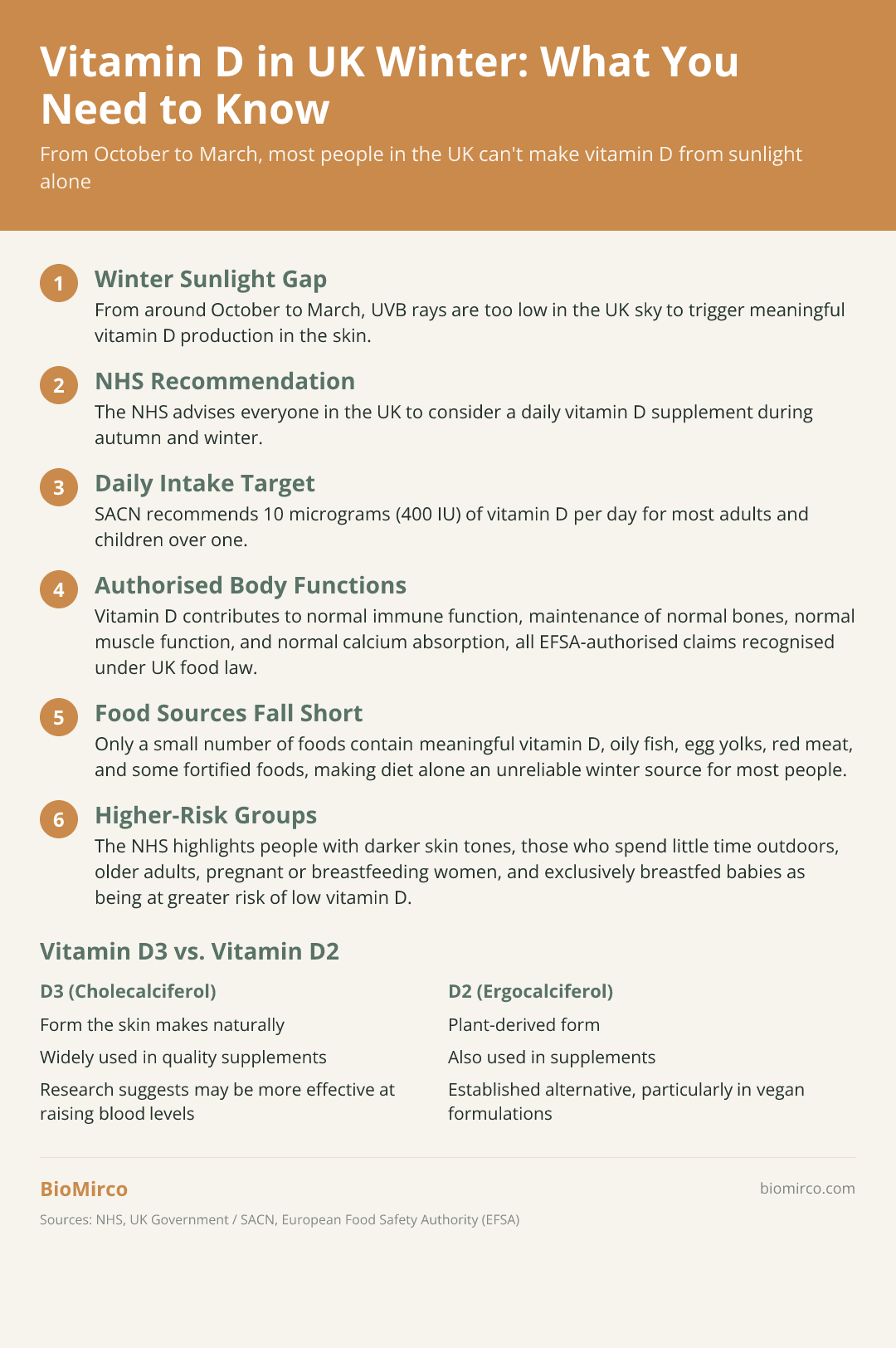
From around October to March, the UK does not get enough sunlight for your skin to make vitamin D. The sun sits too low in the sky for the ultraviolet B rays that trigger vitamin D production to reach the surface at useful levels. This means that for roughly half the year, most people in the UK have no meaningful way to make vitamin D naturally from sunlight alone.
The NHS recommends that everyone in the UK considers taking a daily vitamin D supplement during autumn and winter. This applies to most adults and children over the age of one.
People with darker skin tones, those who cover most of their skin outdoors, and people who spend little time outside are advised to consider supplementing all year round.
What does vitamin D actually do in the body?
Vitamin D contributes to the normal function of the immune system. It also contributes to the maintenance of normal bones, the maintenance of normal muscle function, and the normal absorption and use of calcium and phosphorus.
These are authorised health claims, meaning they are supported by the scientific assessment of the European Food Safety Authority and recognised under UK food law. They reflect real, established roles that vitamin D plays in normal body function.
- Vitamin D contributes to normal immune system function
- Vitamin D contributes to the maintenance of normal bones
- Vitamin D contributes to normal muscle function
- Vitamin D contributes to normal blood calcium levels
These functions matter every day, but they feel especially relevant in winter when immune demands tend to increase and people are spending less time outdoors and moving less.
How much vitamin D do adults need each day?
The UK government's Scientific Advisory Committee on Nutrition (SACN) recommends a daily intake of 10 micrograms (400 IU) of vitamin D for most adults and children over the age of one, particularly during autumn and winter. Many premium supplement formulations provide higher amounts, and it is worth checking any supplement label against the reference nutrient intake for your age group.
Diet alone is unlikely to meet daily vitamin D needs. Only a small number of foods contain meaningful amounts, including oily fish, egg yolks, red meat and fortified foods such as some cereals and plant milks.
Does vitamin D have any role in fertility and preconception health?
Vitamin D is worth noting in the context of preconception wellness, though it is important to be clear about what is and is not established. Vitamin D contributes to normal cell division and normal immune system function, both of which are relevant to general health during preconception preparation. Research into vitamin D and reproductive health is ongoing, and it is an area that many fertility-aware healthcare professionals pay attention to.
If you are preparing for pregnancy or trying to conceive, it is worth discussing your vitamin D levels with your GP or midwife. A simple blood test can check your status and help you understand whether supplementation is appropriate for you.
Folate and folic acid are the nutrients most specifically associated with preconception support in UK guidance, with the NHS recommending 400 micrograms of folic acid daily for women who are trying to conceive or could become pregnant. Vitamin D sits alongside this as part of a broader daily wellness foundation.
Who is most at risk of low vitamin D in winter?
Certain groups are more likely to have low vitamin D during the winter months. The NHS highlights the following groups as being at higher risk.
- People who spend little time outdoors
- People with darker skin tones, as more melanin reduces the skin's ability to make vitamin D from sunlight
- People who are pregnant or breastfeeding
- Older adults
- People who cover most of their skin when outdoors
- Babies and young children, particularly those who are exclusively breastfed
If you fall into any of these groups, supplementation through the winter months is especially worth considering. As always, speaking to a GP or pharmacist is the right starting point if you are unsure.
Can you get enough vitamin D from food alone in winter?
It is very difficult to meet vitamin D needs through food alone in winter. The richest dietary sources include oily fish such as salmon, mackerel and sardines, as well as egg yolks and liver. Fortified foods such as some breakfast cereals, dairy products and plant-based milks also contribute, but the amounts are modest.
For most people in the UK, a daily supplement during autumn and winter is the most practical and reliable way to maintain vitamin D intake at the levels the NHS and UK government recommend.
What should you look for in a vitamin D supplement?
Not all vitamin D supplements are the same. Here are a few things worth considering when choosing one.
| Factor | What to look for |
|---|---|
| Form of vitamin D | Vitamin D3 (cholecalciferol) is the form your skin makes naturally and is widely used in quality supplements. Vitamin D2 is plant-derived and also used, though research suggests D3 may be more effective at raising blood levels. |
| Dose | The NHS recommends 10mcg (400 IU) as a daily baseline for most adults. Many supplements provide more than this. If you are unsure what is right for you, check with a healthcare professional. |
| Quality and manufacturing standards | Look for supplements made to GMP (Good Manufacturing Practice) standards and, ideally, third-party tested for quality and purity. |
| Format | Vitamin D is fat-soluble, so taking it with a meal that contains some fat may help absorption. It is available in capsules, softgels, tablets and liquid drops. |
At BioMirco, careful formulation and ingredient selection sit at the heart of everything we make. If you are exploring daily wellness support this winter, our supplements are designed with considered nutrient choices and clear, science-informed rationale.
Is there anything else to think about alongside vitamin D in winter?
Vitamin D is one part of a broader picture of winter wellness. Other nutrients that contribute to normal immune system function include vitamin C and zinc. Magnesium contributes to normal psychological function and the reduction of tiredness and fatigue, which many people notice more during the darker months.
Practical lifestyle habits also matter. Regular movement, consistent sleep, varied whole food intake and spending time outside during daylight hours (even when it is cold) all support general wellbeing through winter.
If you are pregnant, trying to conceive or have an existing health condition, always speak to your GP or midwife before starting a new supplement.
This article is for general information and education only. It is not medical advice. Nutrient claims refer to authorised biological roles of nutrients, not to guaranteed outcomes. Always speak with your GP or a qualified healthcare professional about your individual needs.